A well-kept yard is one of the few home upgrades you can enjoy every single day without stepping indoors. Still, most people stall before buying a single plant, usually because they try to fix everything at once. The yard decoration decadgarden approach keeps it simple: study the space you already have, decide how you want to use it, then decorate in layers. DecadGarden is a home and outdoor living blog built around exactly that idea, covering home tips, garden hacks, backyard guides and yard decoration ideas for real homes rather than show gardens decadgarden.
DecadGarden Yard Decoration: What the Approach Actually Means
Yard decoration is not the same thing as landscaping. Landscaping changes the structure of a plot — soil, grading, drainage, permanent planting. Decoration is the layer people actually see and use: pots, seating, paths, lighting, colour and small features that give a space character. DecadGarden treats these as practical decisions rather than pure styling, which is why its guides spend as much time on drainage and maintenance as they do on cushions and lanterns decadgarden.
Three questions decide almost everything that follows:
- How many hours a week can you realistically spend on upkeep?
- Who uses the space — adults, children, pets, guests?
- Which part of the day matters most: mornings, afternoons, or evenings?
Honest answers to all three will cut the items you actually need to purchase roughly in half.
Start With What You Already Have
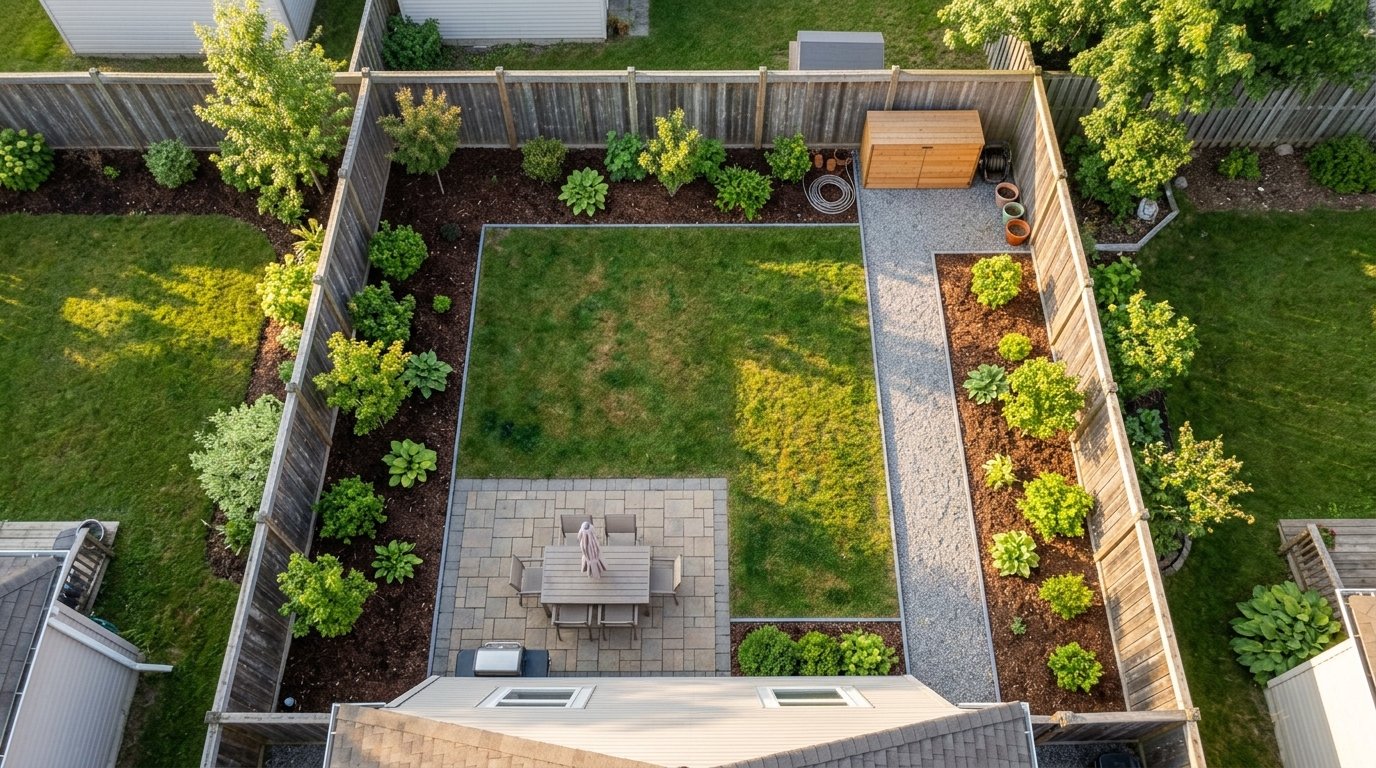
Walk the yard at three different times of day and note where sun lands and where water sits after rain. Full-sun corners suit flowering shrubs and herbs. Damp patches near a downpipe will kill anything that dislikes wet roots. Mark the routes people naturally walk, because a path that fights those habits gets ignored no matter how good the paving looks.
Then divide the space into zones. A simple working set: seating, dining or entertaining, planting beds, open lawn, walkway, and a storage corner for tools and cushions. Even a rough pencil sketch prevents the two most common errors — a bench placed in the hottest part of the yard, and no storage, so hoses and toys end up scattered across the lawn.
Pick One Style and Repeat It
Consistency reads as good design far more than expensive materials do.
Modern minimal
Restraint carries the whole look: crisp geometry, greenery kept close to the ground, seating finished in grey or charcoal, and no more than two oversized planters to break the calm.
Cottage garden
Mixed flowering perennials, wooden furniture, gravel or stone paths, slightly crowded planting that feels relaxed rather than careless.
Traditional green
A maintained lawn, clipped hedges, classic planters, medium trees for shade and structure.
Rustic natural
Let aged boards and rough-cut stone carry the structure, bring in lanterns for a warm evening glow, and give the planting room to grow a little untamed.
Choose one, then repeat two or three materials across the whole yard: the same paving, the same pot colour, the same timber tone. Repetition is what makes a modest budget look deliberate.
Plants Give You the Most Return
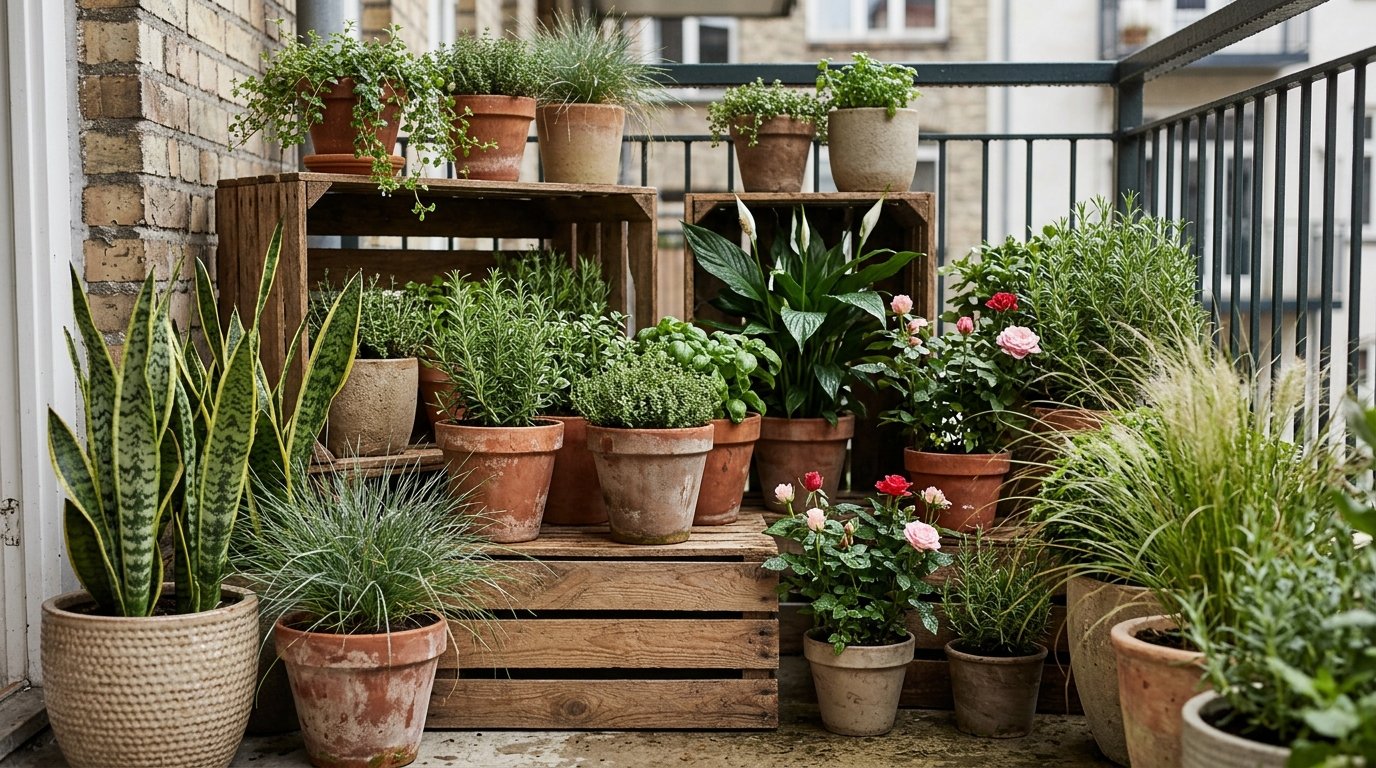
Nothing softens a bare fence or a plain patio faster than greenery, and nothing costs less per square metre. Choose plants for your climate first and your saved inspiration photos second.
- Small yards and balconies: snake plant, peace lily, spider plant, small roses, herbs in containers.
- Larger yards: palms, ficus, bougainvillea, jasmine, bamboo (keep bamboo in a container unless you want a thicket).
- Structure: evergreen shrubs and ornamental grasses hold their shape in winter when everything else vanishes.
Group plants by water and light needs rather than by how they look on the day you buy them. You will water more efficiently and lose fewer plants. Native and locally suited species usually need less feeding, less spraying and less fuss than exotics.
Lighting, Paths and Hardscaping
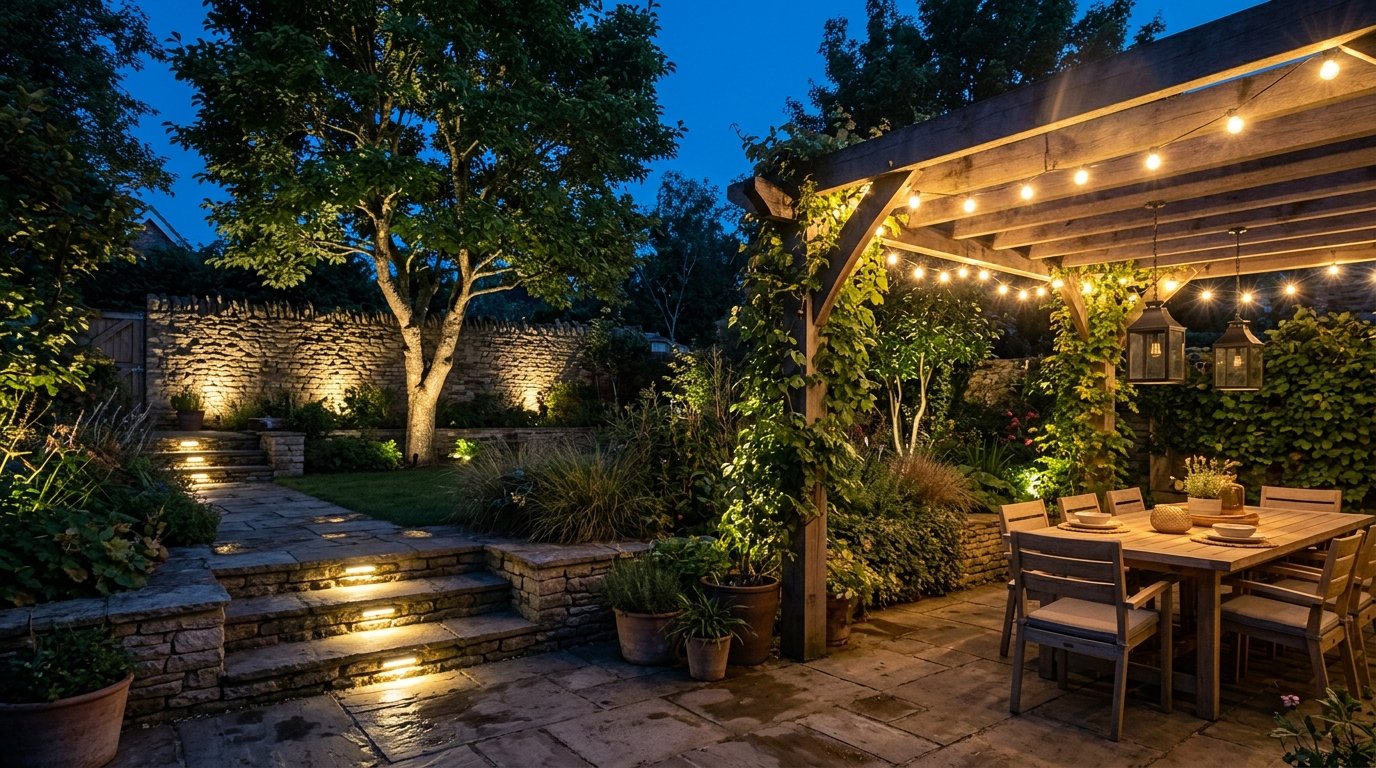
Hardscaping is the skeleton: paths, patios, raised beds, edging. Get this right and the decoration sits on a clean base.
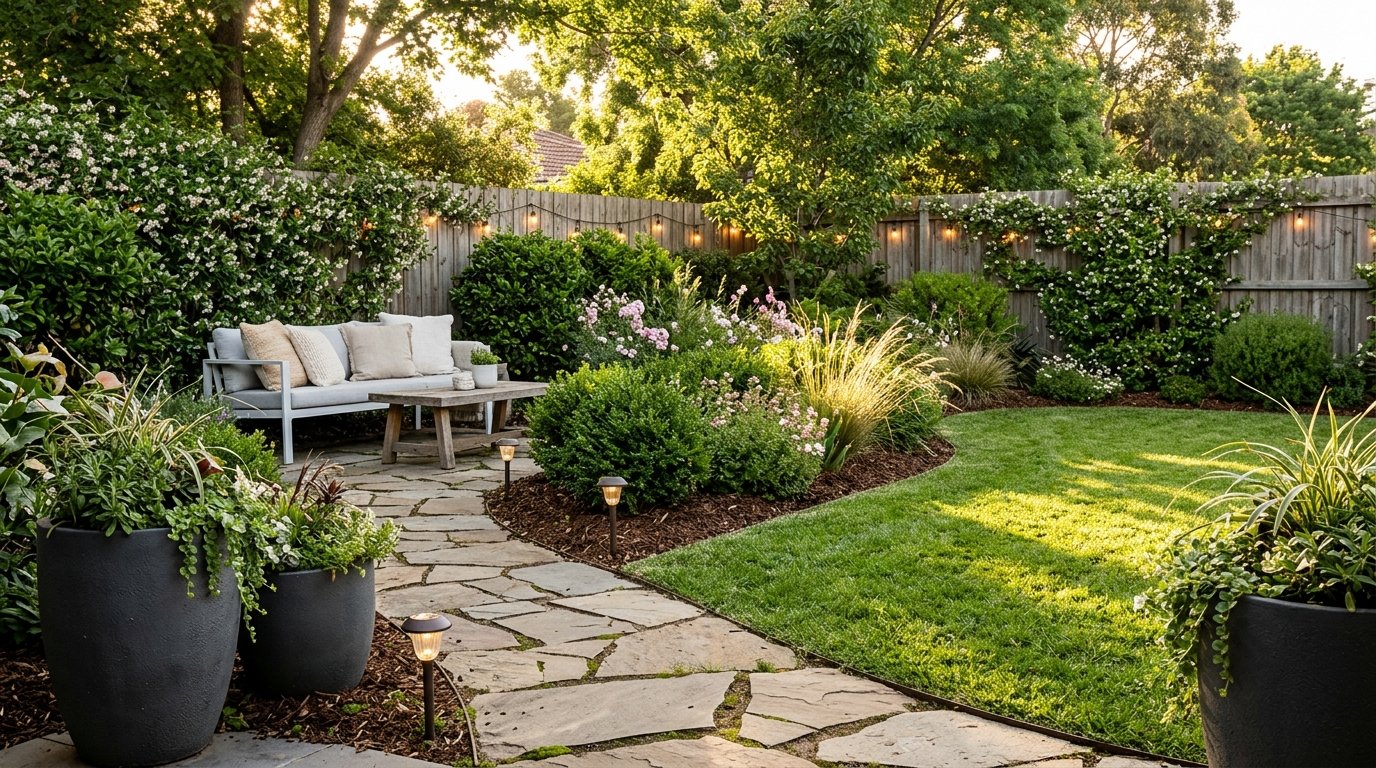
Path materials that last include stone slabs, brick, gravel, pebbles and timber sleepers. Give the walkway soft sweeping bends rather than stiff, ruler-like lines. A curve feels more natural underfoot and draws the eye forward, while solar stakes set along the border keep the route easy to follow after dark.
Lighting does more for the evening atmosphere than any ornament. Mix three layers:
- Ambient — string lights or lanterns under a pergola or along a fence.
- Task — brighter fittings over a grill, steps, or a dining table.
- Accent — uplights on a tree trunk, a wall, or a water feature.
Outdoors, a soft amber tone settles into the evening far more naturally than the harsher blue-white of a standard bulb, which tends to flatten the colour of foliage and timber. Solar fittings cost nothing to run and need no wiring, though they perform best where they get direct sun.
Seating and Furniture That Earns Its Space
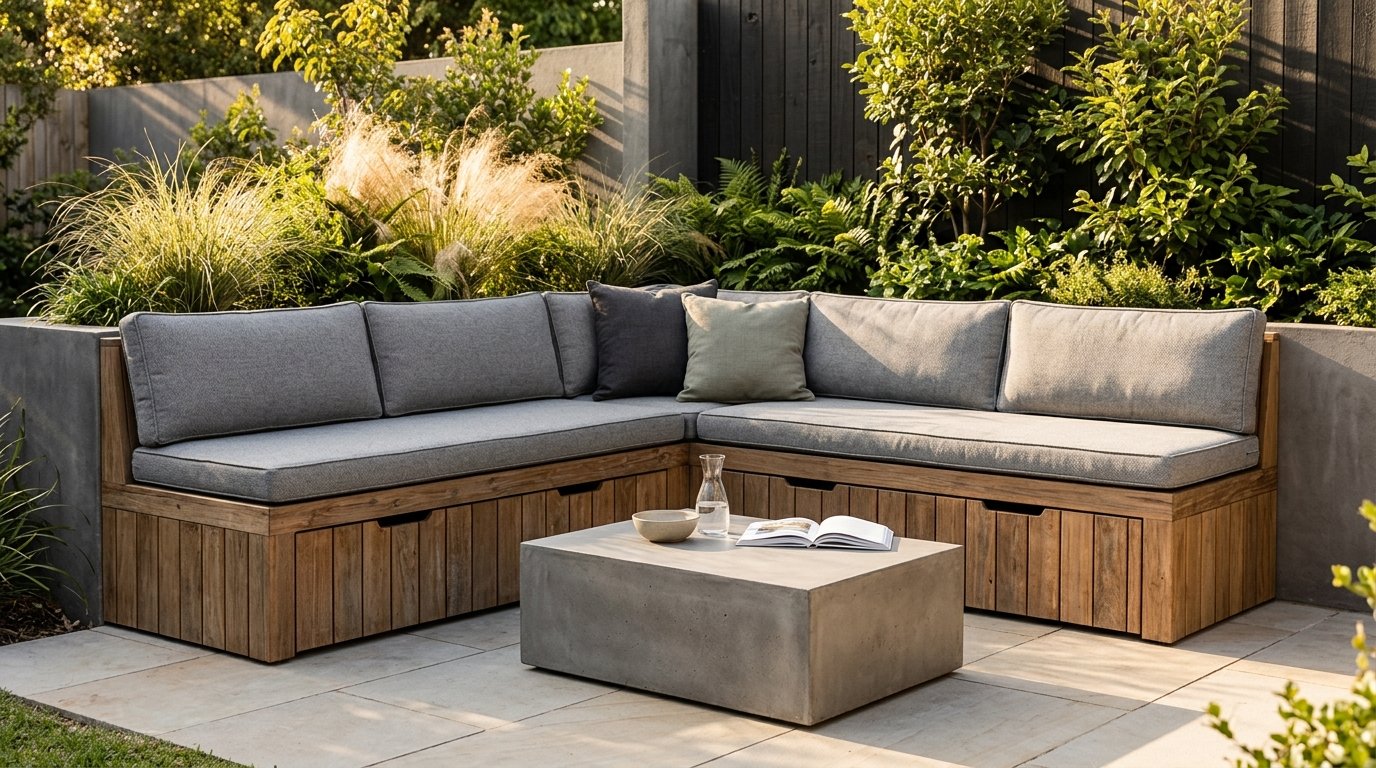
Buy seating before you buy ornaments. A yard with one comfortable chair gets used; a yard with twelve decorative objects and nowhere to sit does not.
Weather resistance matters more than looks. Rattan, powder-coated metal, treated timber and good-quality resin all handle sun and rain. Slide cushions into a dry box the moment the seating goes quiet. In tight spaces, choose foldable or multi-purpose pieces — a bench with storage underneath does two jobs.
Add shade deliberately: a tree, an umbrella, or a pergola. A seating area with no shade is a seating area you use twice.
Budget-Friendly Yard Decoration DecadGarden Ideas
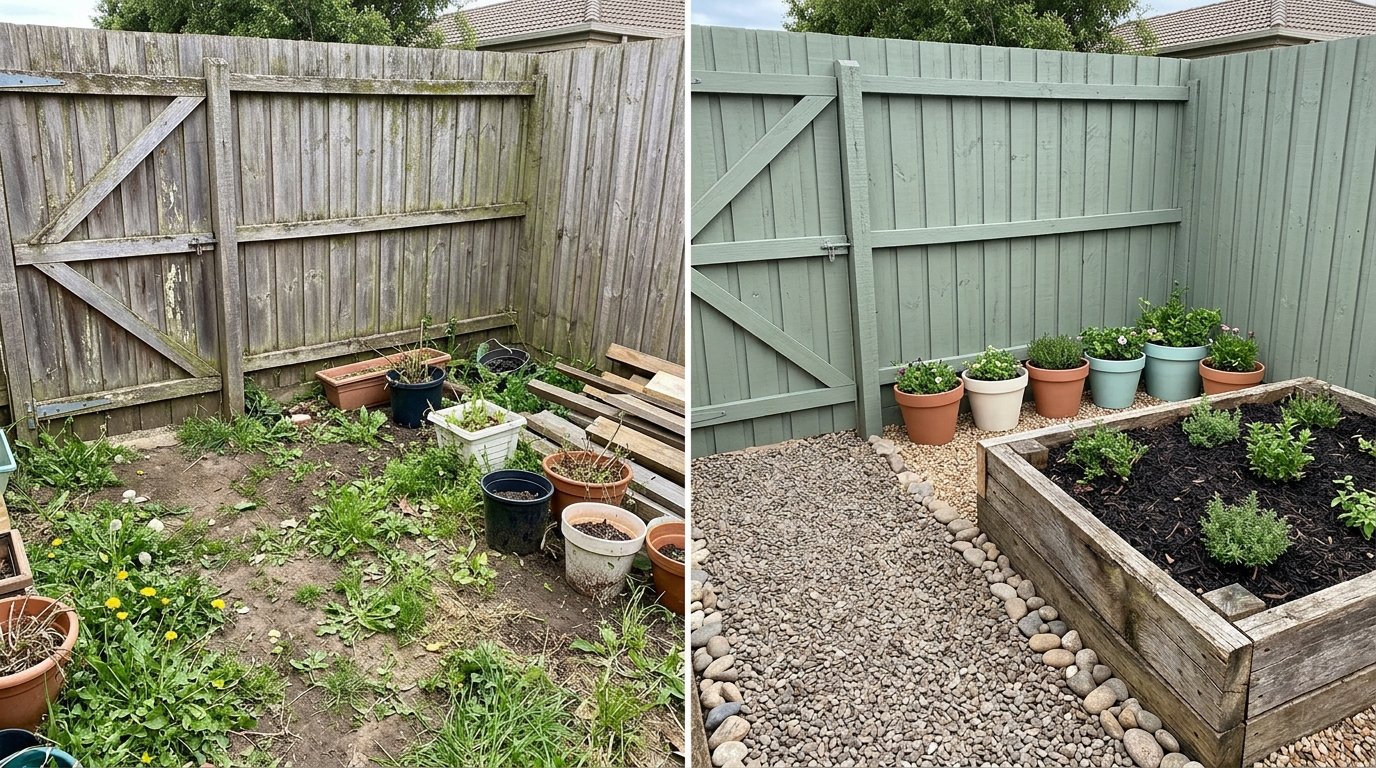
You do not need a landscaper. You need a sequence.
Start with the free work: clear clutter, edge the beds, cut back overgrown shrubs, clean the paving. A tidy yard with no decoration looks better than a cluttered yard full of it.
Then spend in this order:
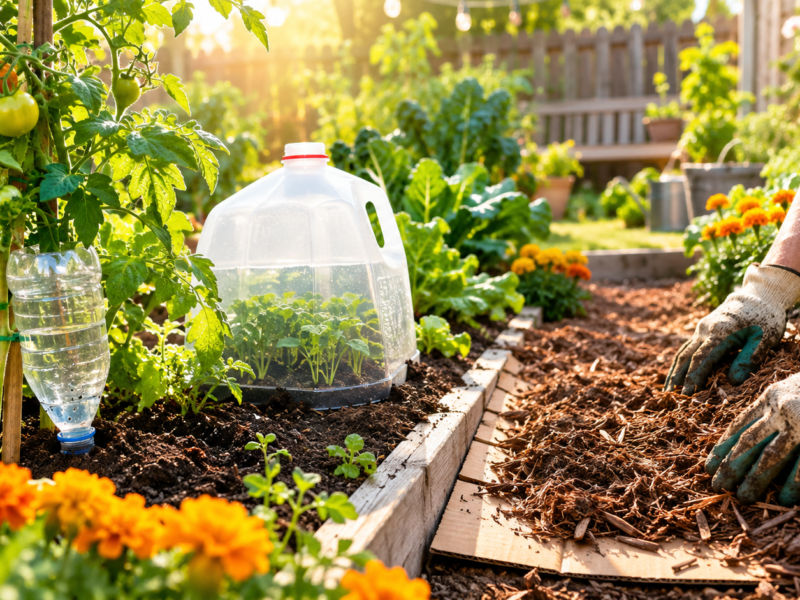
- Fresh mulch or gravel — instant, cheap, and it makes beds look finished.
- Paint — a tired fence, gate, or set of pots costs a fraction of replacing them.
- One statement plant or pot at the entrance.
- Lighting.
- Ornaments last, and fewer than you think.
DIY projects that hold up outdoors: timber crates as plant stands, repainted pots, a pebble border along a path, and a simple raised bed built from reclaimed boards. Anything made of untreated wood should be sealed if it stays outside through winter.
Keep It Looking Good Through the Seasons
Decoration is half the job; maintenance is the other half, and it is far easier on a schedule.
- Spring — clear winter debris, refresh mulch, plant, check irrigation and lighting.
- Summer — water deeply rather than often, trim, deadhead flowers, watch for pests.
- Autumn — rake, plant spring bulbs, add compost, prepare tender plants.
- Winter — store cushions, cover furniture, prune dormant trees, plan next year’s changes.
A weekly ten-minute walk with a bag for weeds and litter prevents most of the work that would otherwise pile up.
Mistakes That Make a Yard Look Unfinished
- Buying furniture before deciding the layout.
- Planting trees close to walls, fences, or buried pipes.
- Mixing four styles in one small space.
- Ignoring where water drains.
- Overcrowding beds so plants compete and look messy.
- Choosing high-maintenance plants you will not have time for.
- Lighting everything instead of lighting what matters.
FAQ
Is yard decoration decadgarden a brand or a design style?
It is not a product line. DecadGarden is an online home and outdoor living blog that publishes practical yard decoration, gardening and backyard guides, and “decadgarden” works as shorthand for that low-fuss approach to outdoor spaces decadgarden.
What should I decorate first in a bare yard?
Seating and shade, then a path. Those two elements decide how the space is used; the rest of the decoration follows naturally once people actually sit outside.
How much does a basic yard makeover cost?
It depends on how much you do yourself. Mulch, paint, seeds and a few containers are the cheapest visible upgrades, and doing them in stages spreads the spend across a season instead of one weekend.
Can I decorate a rental yard?
Yes. Use containers instead of in-ground planting, freestanding furniture, plug-in or solar lighting, and movable edging. Everything lifts out when you leave.
How often should a yard be maintained?
Weekly during the growing season for mowing, watering and weeding, with deeper seasonal tasks each spring and autumn.
Final Thoughts
Good yards are built in stages, not bought in one order. Fix the layout, plant for your climate, add light where you actually sit, and keep decoration to the pieces you genuinely like. That is the whole idea behind the yard decoration decadgarden approach, and it works in a courtyard, a suburban backyard, or on a balcony with three pots on it.
If you are starting this weekend, pick one zone — the seating corner is usually the fastest win — and finish it completely before moving on. For more practical guides on home, garden and backyard projects, browse the latest articles at DecadGarden.
Visit Decadegarden for more details.