The decadgarden yard tips by decoratoradvice method is simple. You study your light, your soil and your USDA zone before you spend a dollar. Then you buy plants that match those three facts. Most US homeowners can reshape a tired yard in one weekend and a few hundred dollars.
This guide gives you ten real moves, from style and plant picks to honest 2026 prices. You will also see the swaps that save money and the slips that waste it. Grab a notebook and walk your yard once. That single tour answers most of your questions.
Why These DecadeGarden Yard Ideas Beat Cookie-Cutter Plans
Most garden articles hand you a pretty photo and no plan. This one starts with climate and budget instead. Those two facts control every choice that follows.
That order keeps plants alive and projects finished. Fix the soil first and decorate second. Everything after that gets easier.
Read Your Light Before You Buy a Single Plant
Take three phone photos of your yard at 9 a.m., noon and 4 p.m. Note where full sun hits and where shade sits. Full-sun plants want six or more hours of direct light.
Part shade means three to six hours. Deep shade gets less. Match those spots to the plant tags and you cut both watering and plant loss.
Choose One Style and Repeat It
Pick cottage, modern or native prairie and stick with it for two seasons. Each style wants its own shapes, colors and spacing. Mixing three looks is why yards feel cluttered.
One clear theme beats five half-finished ideas. Everything you buy later will click into place.
Cottage Garden Look
Cottage yards are loose and full. Plant purple coneflower, black-eyed Susan and lady’s mantle in soft pinks, yellows and blues. Space them 12 to 18 inches apart so the bed fills in fast.
Modern Minimal Look
Modern yards use fewer plants and clean lines. Pick blue fescue grass, a few boxwood balls and straight gravel edges. Repeat just two colors and let empty space breathe.
Native Prairie Look
Prairie yards work with your local rain and soil. Pair little bluestem with milkweed and coneflower. Skip fertilizer. These plants handle zones 3 to 9 in full sun and feed bees all summer.
Fix the Soil First, Then Plant
Squeeze a handful of soil. Crumbly means good. Sticky clay and gritty sand both need help before anything thrives.
Work in 2 to 3 inches of compost with a garden fork. A soil test tells you what else to add. County extension labs charge about $11 to $30 per sample, so testing is cheap insurance.
Zone-Smart Perennials That Come Back Every Spring
Perennials save money because they return each year. Check your USDA zone on the official Plant Hardiness Zone Map first. Then buy plants rated one zone colder than yours for a cold buffer.
That small buffer protects you through a rough winter. It also widens your choices at the nursery.
|
Plant |
Zones | Sun | Height | Typical Price |
|
Black-eyed Susan (Rudbeckia) |
3–9 |
Full sun |
1–3 ft |
8–14 |
|
Purple coneflower (Echinacea) |
3–8 | Full sun | 2–4 ft |
9–15 |
|
Boxwood (Buxus), 3 gal |
5–9 | Sun to part shade | 2–4 ft |
22–46 |
|
Daylily (Hemerocallis) |
3–9 | Sun to part shade | 1–3 ft |
7–12 |
| Sedum ‘Autumn Joy’ |
3–9 |
Full sun |
1–2 ft |
8–13 |
Build a Raised Bed in One Weekend
A cedar raised bed kit runs about $150 for a 4-by-8-foot size. Building your own from 2-inch cedar boards can land near $80 to $120. Cedar resists rot without chemicals.
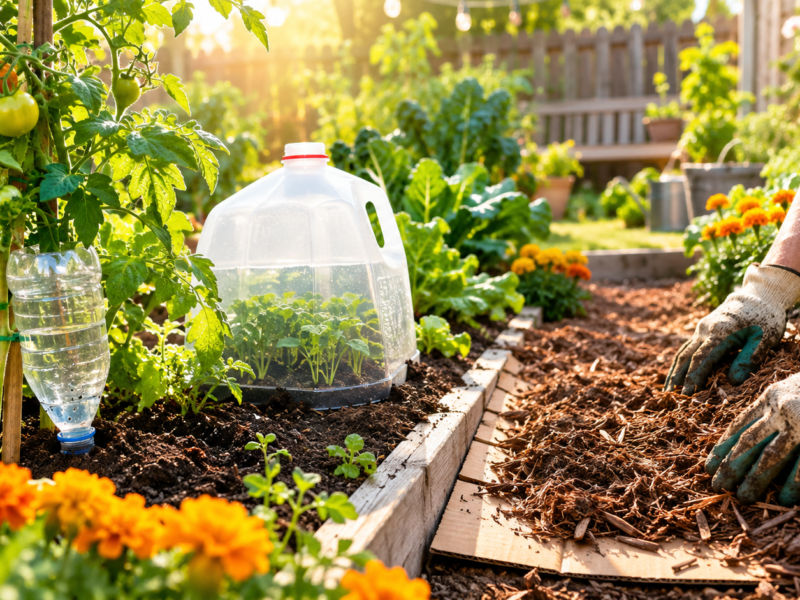
Line the base with cardboard to smother grass. Then fill with topsoil and compost, water well and let it settle a week before planting.
Tools You Actually Need
You need a drill, 2.5-inch exterior screws, a tape measure, a level, gloves and a wheelbarrow. Add a plastic liner for extra rot protection. If you own no tools, a starter set costs under $120.
Lay a DIY Paver Patio
DIY paver patio materials run $5 to $12 per square foot. A 100-square-foot patio costs about $500 to $1,200. Hiring a crew can run $30 to $50 per square foot, so doing it yourself saves real money.
Dig 6 inches down, then add 4 inches of crushed gravel and 1 inch of sand. Tamp each layer and keep a slight slope for drainage.
Spread Mulch Like a Pro
Mulch holds moisture and blocks weeds. Spread 2 to 3 inches deep and keep it 2 inches off tree trunks. A mulch volcano against bark invites rot.
Bagged 2-cubic-foot mulch costs about $3.67 to $5.47. Bulk compost runs $20 to $50 per cubic yard. Many stores drop to $2 a bag during spring mulch sales.
Real 2026 Costs: Budget, Mid-Range and Premium
You can refresh a yard at three very different price points. The table below shows realistic 2026 numbers for a 500-square-foot space.
Budget work leans on seed, mulch and used pots. Premium work adds stone, lighting and larger shrubs. Pick the row that fits your wallet and your patience.
|
Item |
Budget | Mid-Range |
Premium |
|
Mulch (500 sq ft) |
$60 bulk | $120 bagged |
$200 colored |
|
Plants |
$80 seed | $300 1-gal pots |
$900 3-gal shrubs |
|
Hardscape |
$0 none | $500 gravel |
$2,400 pavers |
|
Lighting |
$40 solar | $150 mixed |
$600 low-voltage |
|
Decor |
$30 DIY | $100 thrift mix |
$350 metal/stone |
|
Total |
≈$210 | ≈$1,170 |
≈$4,450 |
Small-Yard and Renter-Friendly Wins
Small spaces reward vertical thinking. Use trellises, stacked pots and railing planters to grow more without a bigger footprint. Fewer, larger pots look calmer than a shelf of tiny ones.
Renters can still garden without digging. Grow in fabric, grow bags, window boxes and rolling planters you can move. Ask before you drill or build, and everything travels with you at move-out.
Keep Pets and Kids Safe
Skip foxglove, oleander and sago palm around pets and toddlers. They are toxic if chewed or eaten. Good looks are not worth a vet bill.
Safe picks include marigold, sunflower and snapdragon. Check the ASPCA toxic plant list before buying anything new.
Common Mistakes That Cost You Money
Planting too close is the top error in these DecadeGarden yard ideas. Give every shrub its full spread or you will dig it up next year.
Watering a little every day kills roots. Water deeply twice a week instead. Deep roots survive heat far better than shallow ones.
FAQ:Decadgarden Yard Tips by Decoratoradvice
What is the cheapest way to fill a big garden bed?
Buy bulk compost by the cubic yard and top it with mulch. Free wood chips from local tree crews cut the cost even more.
Which plants survive cold winters best?
Choose perennials rated one USDA zone colder than your own. Black-eyed Susan and sedum both handle zones 3 to 9.
How deep should mulch be?
Spread 2 to 3 inches and keep it 2 inches away from trunks. Deeper than that traps moisture against bark and invites rot.
Final Thoughts (Decadgarden Yard Tips by Decoratoradvice)
A great yard is not about spending the most. It is about reading your light, fixing your soil and choosing plants built for your zone. These decadgarden yard tips by decoratoradvice give you a clear order to work in. Start with one bed or one corner. Add zone-right plants, a layer of mulch and a little evening light.
Repeat those small wins each season and your yard grows into a space you actually use. That steady progress beats a rushed weekend every single time.
Visit DecadeGarden for more details.