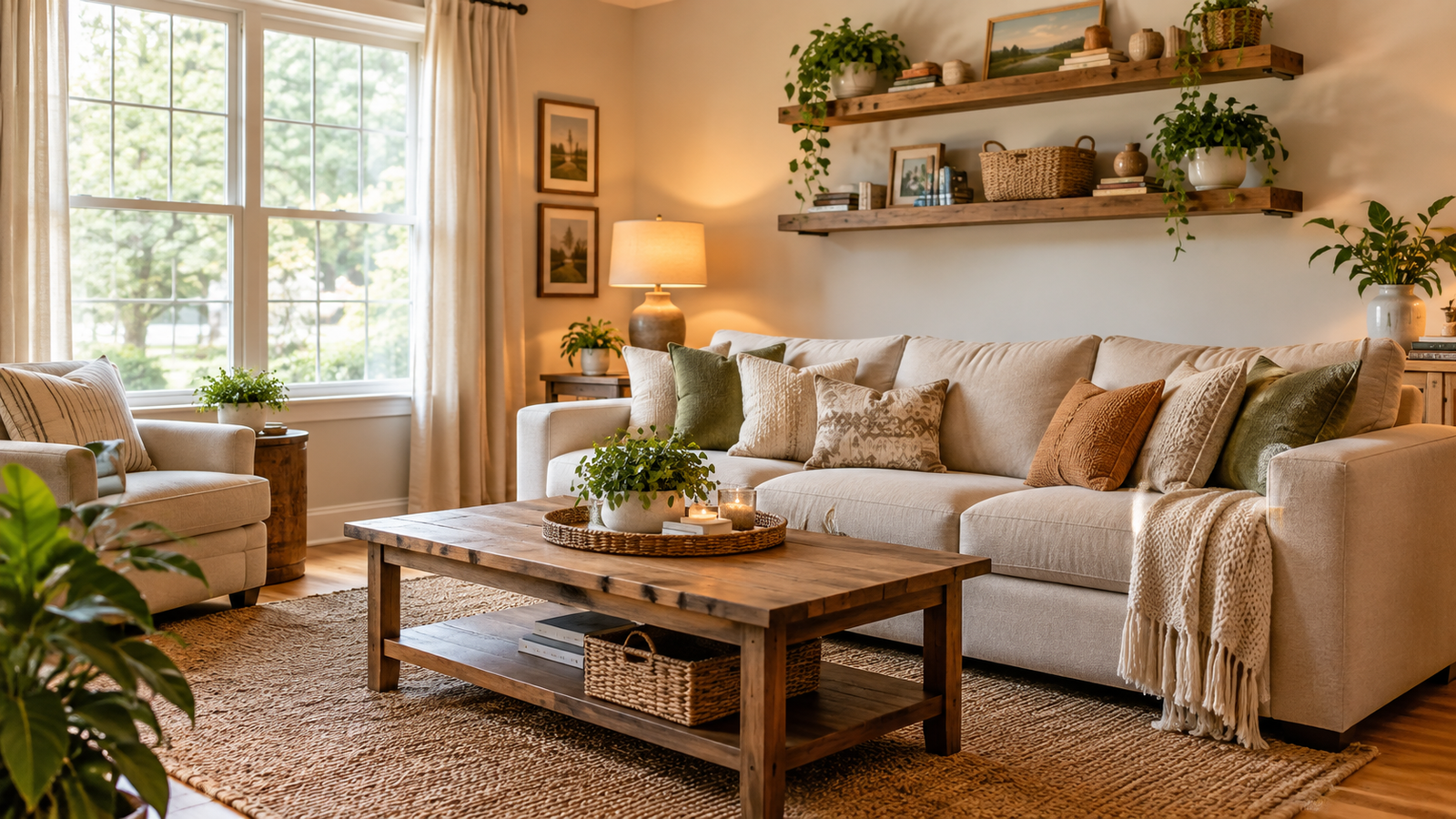
Home Tips and Tricks Decadgarden can make a familiar space feel fresh, comfortable, and welcoming without requiring a major makeover. Last October, I sat in my own living room at 7 p.m., under one lonely ceiling bulb, and thought, “Why does this place feel like a waiting room?” Nothing was wrong with it, exactly. The furniture was fine. The paint was fine. But the room had no warmth, the kitchen counters had disappeared under mail, and I couldn’t remember the last time anything in the hallway had a proper home.
Home Tips and Tricks Decadgarden)Here’s the thing I’ve learned since: a comfortable house doesn’t come from a renovation budget. It comes from a handful of smart moves in the right places. This guide is the full list—the same home tips and tricks. Decadgarden readers keep asking me for it. Storage, lighting, décor, plants, and upkeep. Most of it costs under $100 total, and almost all of it can be done in a weekend. Some of it costs nothing. Let’s get into it.
Walk Your House Before You Spend a Rupee or a Dollar
Don’t shop yet. Seriously. First, watch how you actually live in each room for a few days. Where do keys pile up? Where do you sidle sideways past the coffee table? Those annoying spots—not Pinterest—should decide what you fix first.
Then try my favorite free experiment. Move one piece of furniture and live with it for a week. I shifted our sofa maybe six inches off the wall last year, and instantly the room breathed. Walking paths got wider, the rug finally made sense, and the whole seating area stopped looking like furniture shoved against walls. If the new spot annoys you after seven days, slide it back. That’s the whole cost of the test: nothing.
Living room
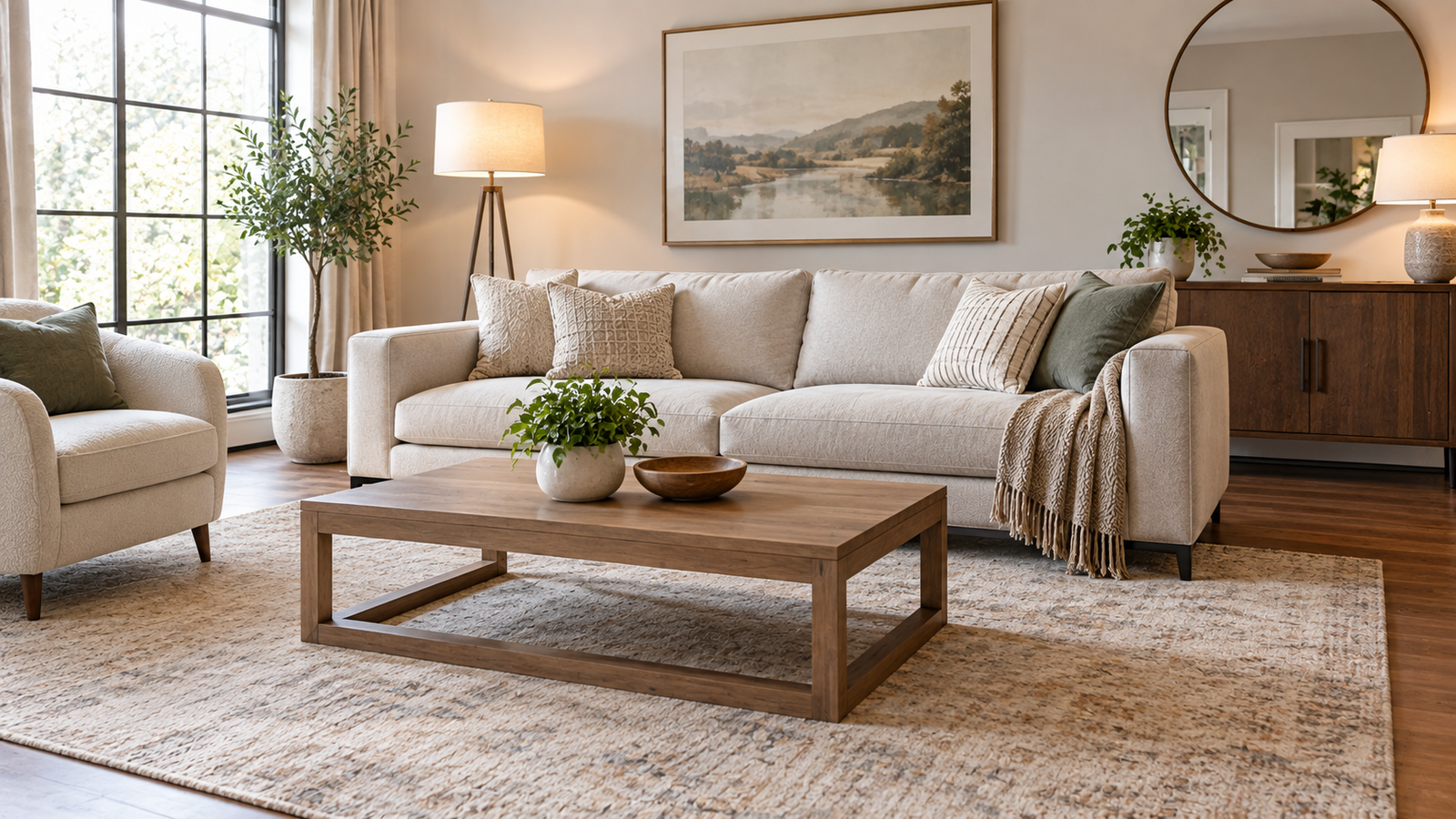
Float the sofa off the wall, anchor the seating with an area rug, and clear the coffee table down to two or three things. That’s it. A calm focal point, zero purchases.
Kitchen
Keep the stuff you grab daily somewhere between your knees and your shoulders—nothing lower, nothing higher. That blender you drag out twice a year? It doesn’t earn prime real estate. High shelf. And keep the countertop clutter to a coffee maker and one cutting board—I allowed myself a knife block too, and I refuse to feel guilty about it. Dinner got noticeably less stressful once I stopped moving mail around just to chop an onion.
Bedroom
Nightstand rule: one lamp, one book. Everything else lives in the drawer. Swap heavy décor for softer textiles, and the room instantly feels like somewhere you sleep instead of somewhere you store things.
Entryway
A wall hook rail and a shoe tray—about $10 to $20 at IKEA or Target (the IKEA BAGGMUCK tray itself is just $4.99)—end the coat-and-bag migration into your living room. One hook per person. Non-negotiable in our house now.
| Room | Quick Fix | Approx. Cost | Time Needed |
|---|---|---|---|
| Living room | Area rug and cleared coffee table | $40–$120 | 1 hour |
| Kitchen | Zone shelves by how often you use items | $0–$30 | 1 hour |
| Bedroom | Nightstand reset and warm bulb | $5–$15 | 30 minutes |
| Entryway | Hook rail and shoe tray | $10–$20 | 45 minutes |
| Bathroom | Drawer dividers and over-door hooks | $10–$25 | 30 minutes |
Storage: Give Everything One Home
Good storage is the quiet backbone of a tidy house. The logic is simple—when every item has exactly one home, you never have to decide where things go twice. Start with what you use daily. Seasonal stuff comes later.
And look up before you look down. Walls and the backs of doors hold far more than people expect. Vertical storage first, boxes and baskets second.
One habit that changed our house: one in, one out. Every time something new comes in, a similar thing leaves. It sounds strict, but a month of it rewires how you shop—I’ve kept it up ever since, and the junk drawer actually closes now (see how the rule plays out in real homes at The Spruce and Apartment Therapy).
Wall shelves
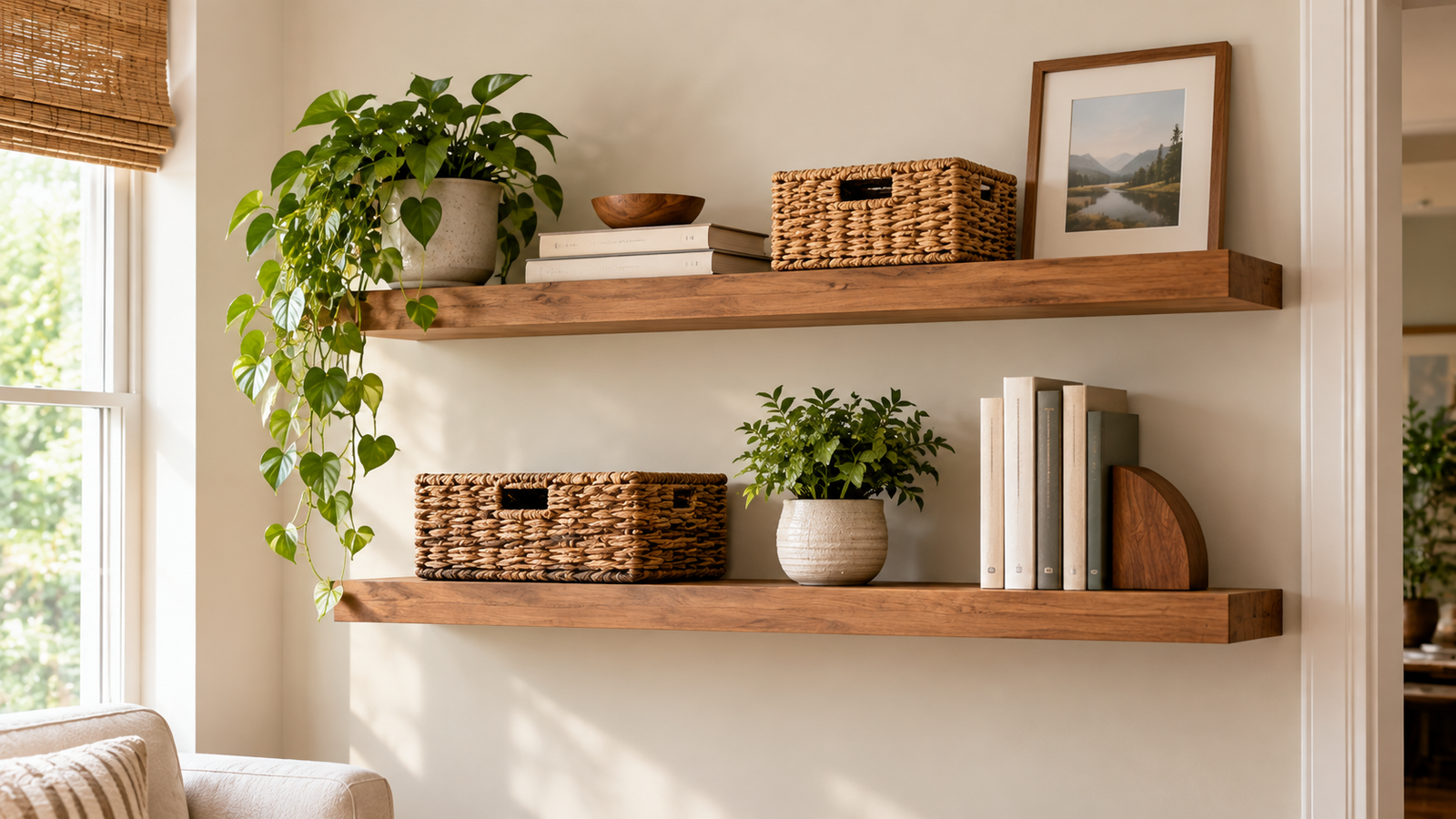
Hang floating shelves with the center near eye level, and match your baskets so small stuff hides instead of decorating you. Small shelves start around $15 each; bigger sets from Home Depot or IKEA cost more. Whatever you hang, hit the studs—a shelf full of books is a heavy load.
Under-bed bins
Flat bins with lids slide under the bed and swallow off-season clothes and spare linens. Dust stays out, and you suddenly have a free closet shelf for everyday clothes. Best $20 I spent that year.
Multi-use furniture
A storage ottoman is a blanket chest that moonlights as a seat. A cubby bench by the door eats the shoe pile. Pick pieces in a similar wood tone so it reads “planned,” not “yard sale.”
Layer Your Lighting—This Is the Fix People Skip
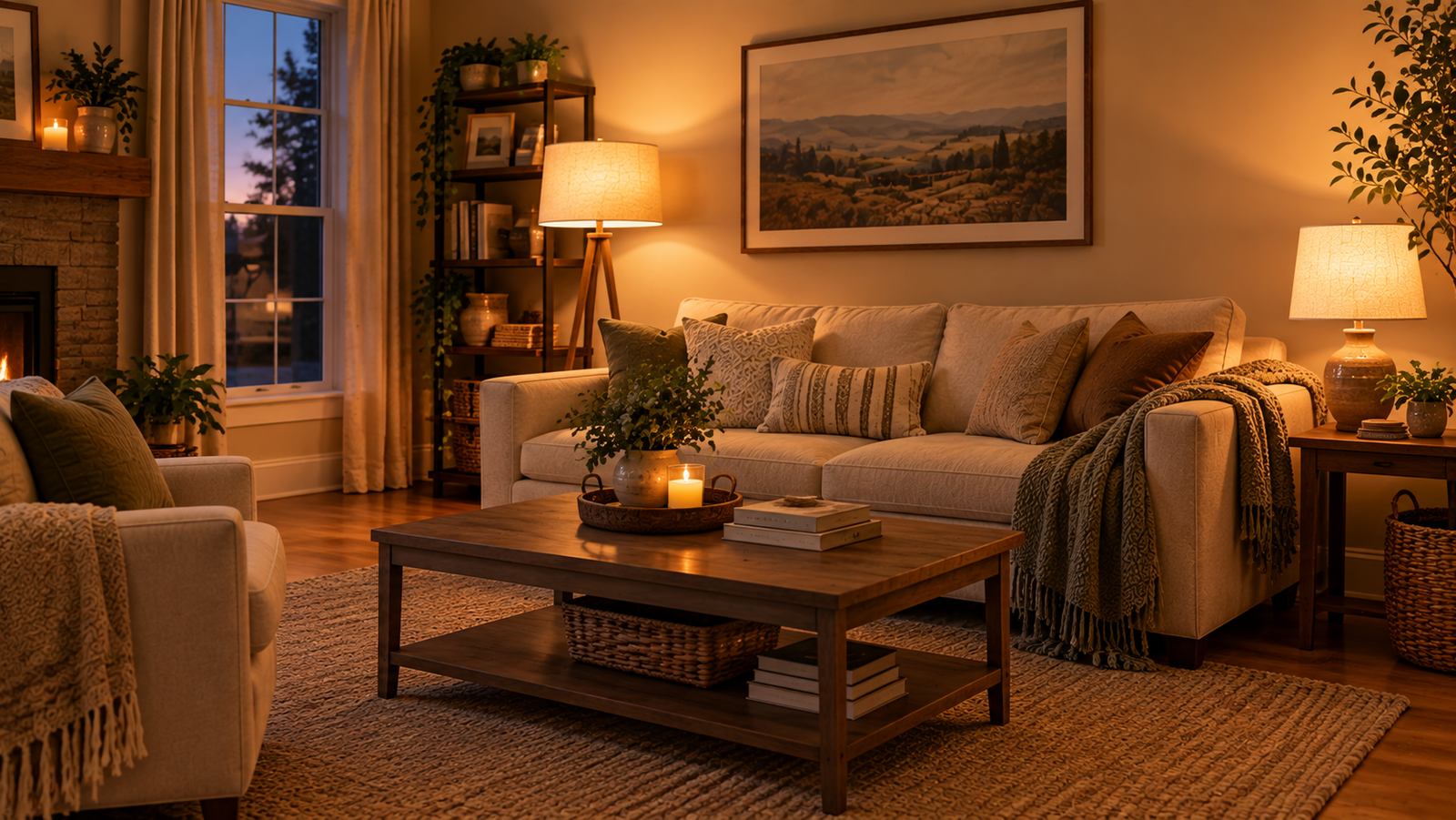
If you change only one thing from this article, change this. One ceiling fixture flattens a room and throws harsh little shadows under everyone’s eyes. Layered lighting—ambient plus task plus accent—is what makes a room feel expensive, and it costs less than a takeaway dinner.
Bulb color matters just as much. That number on the box, the Kelvin one? Lower is warmer and cozier; higher is crisp and bluish. I swapped our living room bulbs to 2700K one evening, and my partner walked in and asked if we’d painted. Warm-white LEDs run about $3 to $10 a bulb (Home Depot has them from roughly $2), and it’s the fastest mood change money can buy. Feit’s color temperature guide matches this room-by-room logic.
| Room | Best Kelvin Range | Light Type | Quick Tip |
|---|---|---|---|
| Living room | 2700K | Ambient and accent | Put a floor lamp in a dark corner |
| Bedroom | 2700K | Soft and dimmable | Add bedside lamps with a dimmer |
| Kitchen | 3000–4000K | Task | Install under-cabinet strips |
| Bathroom | 3000K | Even and bright | Light both sides of the mirror |
| Home office | 4000K | Task | Angle the desk lamp away from your writing hand |
A word on under-cabinet strips: I put them off for a year because “wiring.” Then I found plug-in LED strips that stick on in twenty minutes. Chopping vegetables at night went from squinting to pleasant.
Use daylight first.
Free light beats every bulb. Keep windows clear, hang sheer curtains, and put a mirror opposite the window to bounce sun deeper into the room. And clean the glass—the difference after one wipe honestly embarrassed me.
Refresh Your Décor for Under $100
You don’t need a makeover. You need a palette: two main shades, one accent, repeated across pillows, art, and throws. Rooms look finished when colors repeat. Rooms look chaotic when every cushion is its own idea.
Then there’s the oldest styling trick in the book, and it’s free: odd numbers. Three objects of different heights beat four matching ones every time. My shelf went from “display” to “actually styled” the afternoon I removed one candle and spread the other three apart.
Textiles
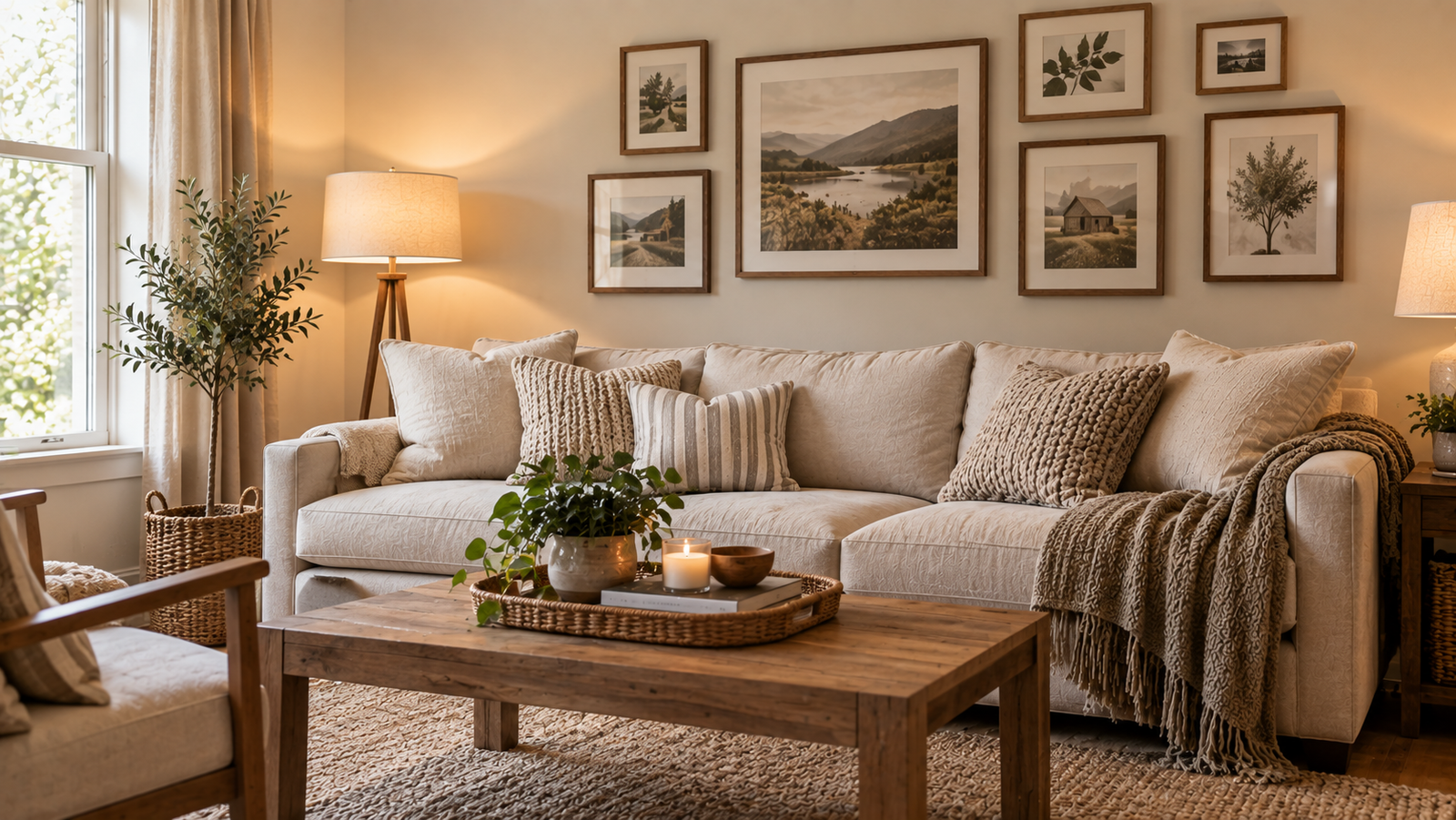
Swap pillow covers and a throw each season. Covers run about $10 to $25 at Target and store flat, which matters more than you’d think. Mix two textures—linen with chunky knit works—and keep patterns to two per room. Trust me on the two. I once did five. It looked like a fabric store had sneezed.
Art and mirrors
One big mirror can fake an extra window. And hang art so its center sits about 57 inches from the floor—the same height galleries use, and it lands at eye level for most people (Apartment Therapy’s guide). One frame finish across a mixed gallery wall keeps it from looking messy.
Paint
A quart covers roughly 100 square feet for about $20 to $30 (Sherwin-Williams’ own calculator uses that figure). One accent wall or a painted front door changes the whole first impression. But test a sample swatch first—and check it at night too, because a color you loved at noon can turn muddy by lamplight. Ask me how I know.
Bring Plants Indoors Without Killing Them
I’ve killed a pothos. Two, actually. Both times the cause was the same: I watered on schedule instead of checking the soil. Most houseplants die from kindness—too much water, too little light. So now I poke a finger an inch or two down before every pour and use drainage pots with saucers. That one habit has saved more plants than any fertilizer ever will.
Start with two or three, grouped on a shelf or side table. Match the plant to your light, not to the photo on the tag.
Low-light picks
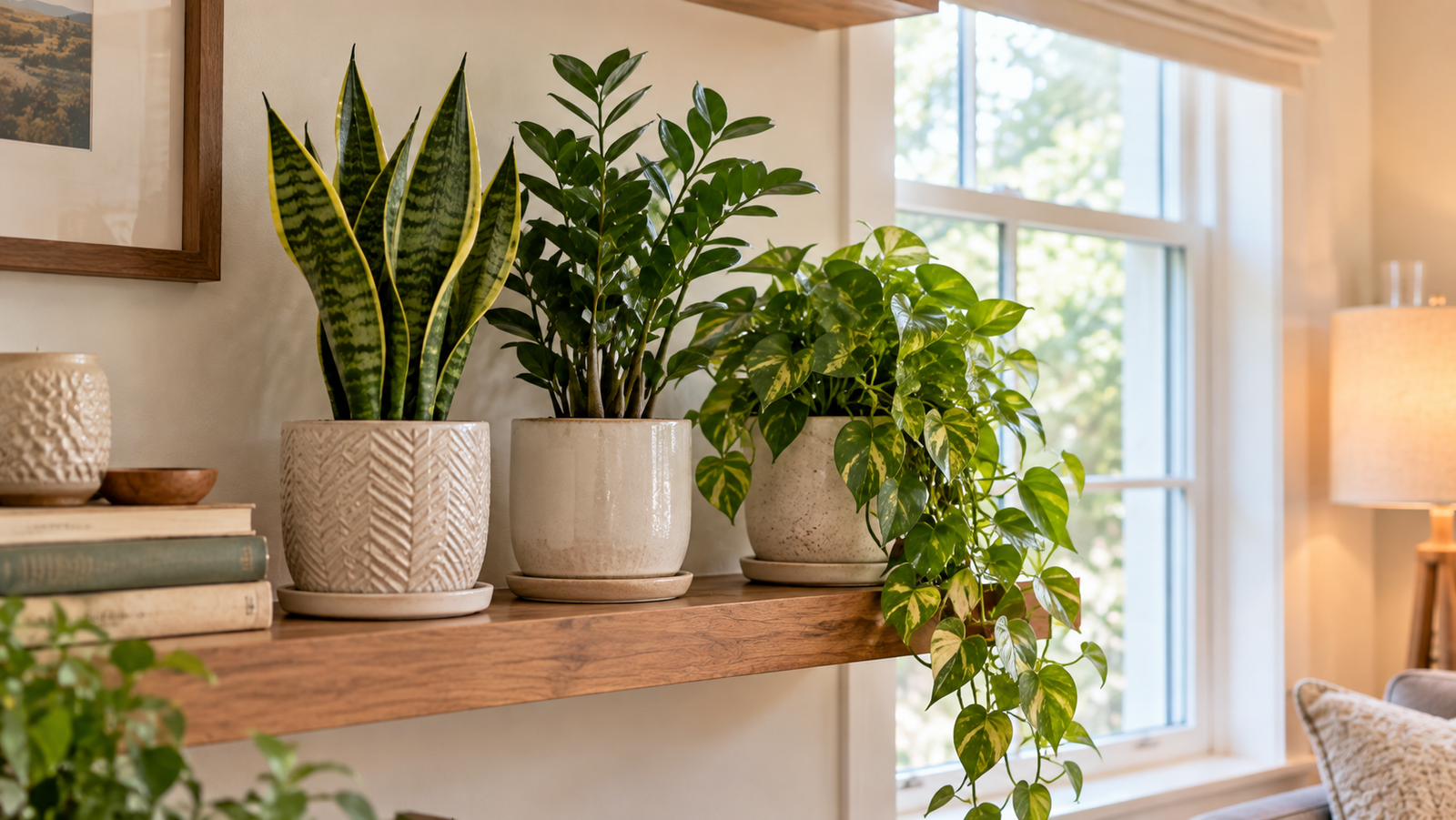
Snake plants, ZZ plants, and pothos shrug off dim corners and irregular watering—ideal for busy homes. One honest catch: the ASPCA lists all three as toxic to cats and dogs (snake plant, ZZ plant, and golden pothos). We keep ours on a high shelf, out of reach of one very determined cat.
Bright-light picks
If paws wander, go with spider plants, parlor palms, or Boston ferns—all non-toxic to cats and dogs per the ASPCA. They want bright, indirect light, so an east-facing window with gentle morning sun suits them perfectly.
Keep It Easy or It Won’t Last
Here’s the part nobody glamorizes: upkeep. A beautiful home falls apart when maintenance feels endless. So pick durable, wipeable, washable materials anywhere kids or pets operate. And build tiny routines instead of weekend marathons—five minutes after dinner beats two hours on Saturday, every single time.
There’s real weight behind this. Research links cluttered, chaotic homes to higher stress—one review found people produce more stress hormones surrounded by clutter, with the effect measuring strongest for women at home (IFS). Tidying isn’t just tidy. It’s how the place feels.
The 10-minute reset
Every evening, set a timer: ten minutes. Things go home, counters get wiped, and pillows get fluffed. When the timer rings, stop. That’s the whole system. It keeps clutter from stacking up and makes weekly cleaning almost boring—in the best way.
Your Simple Weekend Plan(Home Tips and Tricks Decadgarden)
Don’t do everything at once. Pick one room and one problem, then work in this order: storage, lighting, décor, and plants. Fixing storage first protects your budget, because you’ll finally see what you actually need versus what you were about to buy.
A schedule that worked for us: Saturday morning, declutter and reorganize. Saturday afternoon, swap bulbs and rearrange furniture. Sunday, textiles, art, plants. Total spend landed around $150, and by Sunday night the house felt like ours again.
FAQ:Home Tips and Tricks Decadgarden
What is Kelvin best for living room lighting?
Warm white, 2700K to 3000 K. Save 3000–4000K for kitchens and workspaces where task light matters more.
Which houseplants are safe for cats and dogs?
Per the ASPCA, spider plants, parlor palms, and Boston ferns are non-toxic. Snake plants, ZZ plants, and pothos are listed as toxic—skip them in pet homes.
How high should I hang wall art?
Center at about 57 inches from the floor. It’s the gallery standard and lands at eye level for most people.
How much area does a quart of paint cover?
Roughly 100 square feet—usually one accent wall. Test a sample swatch and check it in both daylight and lamplight.
Final Thoughts:Home Tips and Tricks Decadgarden
The best home upgrades are the ones you’ll actually keep doing. Better storage, warmer light, one or three living plants, and a couple of honest décor swaps will change how your home feels more than any renovation.
Skip trends that don’t fit your life. Start with one room this weekend. When your house matches how you actually live, even small changes feel big.
Visit Decadegarden for more details.