Every gardener owns a shelf of half-used products and a memory full of last season’s mistakes. Here’s the encouraging part: you don’t need fancy gear or a big budget to grow well. The garden hacks Decadgarden readers rely on most are small, clever adjustments. Think of a bottle repurposed as a dripper, or cardboard turned into weed control. Even a milk jug can be reborn as a greenhouse. Each idea below costs little or nothing and takes minutes to try. Better yet, it works in a real yard, not just a magazine spread.
What Is DecadGarden?
DecadGarden is a practical home and garden blog focused on usable advice. It covers home tips, garden hacks, yard decoration ideas, and backyard guides for everyday spaces. Its whole philosophy is simple: clear ideas that work in a real yard rather than a perfect showroom. That same spirit shapes every hack in this guide.
Garden Hacks Decadgarden Recommends Most
Feed Your Soil With Kitchen Scraps
Your kitchen already produces half of what your soil wants. Used coffee grounds add gentle organic matter. Sprinkle them in a thin layer first. Then mix them into the top inch of soil so they don’t clump. Crushed eggshells return calcium to the bed. Bake them for ten minutes, then crush them fine. Work them into the planting holes around tomatoes, which often struggle with blossom-end rot. Banana peels make a quick fertilizer soak. Cover one peel with water in a jar and wait two or three days. Pour the liquid at the base of your flowering plants.
Smother Weeds With Cardboard
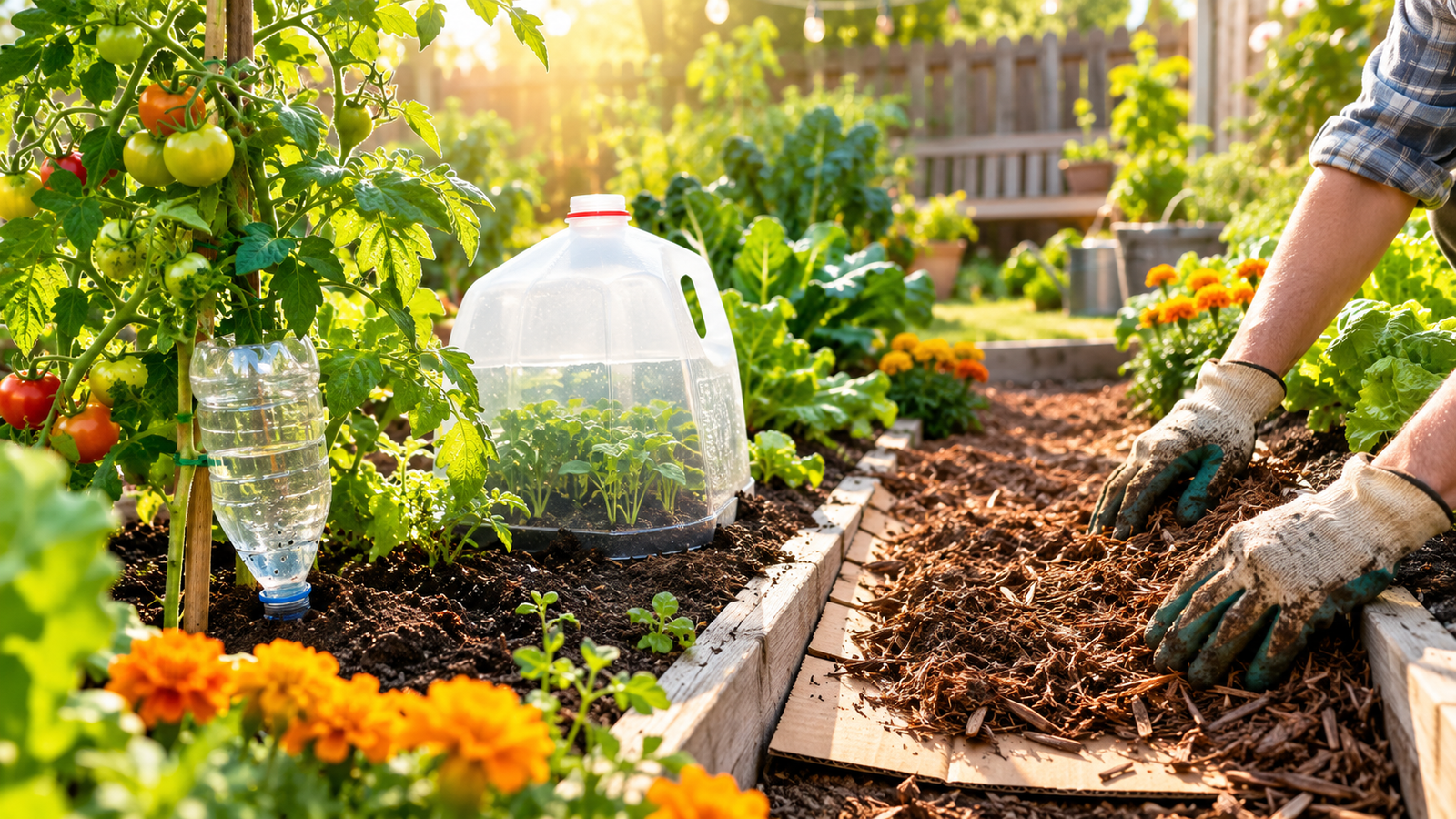
Instead of pulling weeds one by one, lay flattened cardboard boxes directly over them. Overlap the edges by about six inches so no light sneaks through. Soak the cardboard with a hose, then cover it with three inches of mulch. The weeds underneath break down within weeks. Worms pull the paper into the soil. Soon you’re left with a soft, plant-ready bed. Skip landscape fabric while you’re at it. Roots grow into it, and it sheds plastic over time. Most of the time, it creates more problems than it solves.
Water Less, Water Smarter
The Bottle Drip Trick
A plastic bottle makes a surprisingly good irrigation system. Poke four or five pinholes in the side. Bury the bottle neck-down beside a tomato or pepper plant. Leave the base exposed for easy refilling. Water seeps out slowly, right at the root zone, where the plant can actually use it. It’s a lifesaver during a hot week or a short vacation. It also wastes far less water than overhead sprinkling ever will.
Water Early, Mulch Always
Timing matters as much as quantity. Watering between six and eight in the morning gives plants a full day to drink. The leaves dry before nightfall, which keeps fungal diseases from taking hold. Then lock that moisture in with two to three inches of mulch. Pull it back slightly from stems so they can breathe. A bed that’s watered early and mulched well can often go two or three extra days between drinks.
Stop Pests Without Harsh Sprays
Build Simple Barriers
Cutworms can slice through young seedlings overnight, but a cardboard toilet-paper tube set around each stem stops them cold. Slugs hate copper; a strip of copper tape around a pot rim discourages them before they reach your greens. A shallow dish of beer sunk to soil level lures slugs away from the lettuce. Just empty and refill it every couple of mornings.
Let Plants Defend Each Other
Companion planting is old wisdom that still pays off. Basil grown near tomatoes helps mask their scent from pests. The two make a great pair on the plate, too. Marigolds along bed edges are a classic companion for vegetables. Nasturtiums act as a trap crop, drawing aphids away from beans and squash.
Small-Space Hacks That Multiply Your Harvest
Grow Up, Not Out
If your garden is short on square footage, start thinking vertically. Train cucumbers, beans, and even small melons onto a trellis or an arch built between two beds. The fruit stays cleaner, air moves through the leaves to discourage mildew, and picking becomes easier on your back.
Turn Junk Into Planters
A hanging shoe organizer becomes a vertical herb garden. Just add a few drainage holes and fill each pocket with potting mix. An old colander lined with coconut fiber turns into a charming strawberry planter. Best of all, its built-in holes handle drainage for free.
Seed-Starting Hacks That Cost Almost Nothing
Winter Sowing in Milk Jugs
This one feels like cheating. Cut a gallon milk jug almost in half, leaving a hinge. Fill the bottom with three inches of potting mix, then sow your seeds. Tape the jug closed and set it outside in late winter. The jug works as a tiny greenhouse, and seeds sprout on their own schedule. No lights, heat mats, or shelving required. Hardy flowers and brassicas handle this method beautifully.
Sow Thick, Thin Early
Don’t agonize over perfect seed spacing. Scatter the seeds and cover them lightly. Once the seedlings reach two inches, snip the extras with scissors at soil level. The survivors grow stronger, and the thinnings — especially lettuce and radishes — go straight into a salad as homegrown microgreens.
Budget Yard Decoration That Looks High-End
Hacks aren’t only for plants. Line a path with warm-white solar lights instead of cool blue ones for a softer, more expensive glow. Paint smooth stones with plant names for cheap, weatherproof markers that make any bed look tended. Mount an outdoor-safe mirror on a fence to double the greenery in a small yard. A simple strip of brick or gravel between lawn and bed saves hours of edging. It’s the kind of small upgrade DecadGarden loves to share.
Quick Maintenance Hacks Worth Knowing
Three small habits keep a garden running smoothly. First, pour plain white vinegar on weeds sprouting in sidewalk cracks. Pick a hot, sunny day, and keep it away from anything you’re growing. Second, use binder clips to attach row cover to hoops or bed frames. They grip in seconds and never tear the fabric. Third, fill a bucket with coarse sand and a splash of vegetable oil. After use, plunge your hand trowels and pruners in a few times. The sand scrubs off debris while the oil prevents rust.
Frequently Asked Questions
What are the easiest garden hacks for beginners?
Start with mulching, the bottle drip trick, and cardboard weed suppression. All three take under an hour, use items you already own, and deliver visible results within a few weeks.
Do garden hacks really work?
The good ones do. The garden hacks Decadgarden readers love are simply shortcuts built on real principles. Mulch holds moisture, barriers block pests, and compost feeds soil. Stay skeptical of anything promising instant miracles without explaining why it works.
How do I improve garden soil cheaply?
Kitchen scraps, shredded leaves, and cardboard cost nothing. Layer them on the bed as mulch and let the worms do the mixing. Within a season, the soil turns darker, looser, and far easier to work.
When should I try these hacks?
Any time. Watering and mulch hacks work from spring through fall. Winter sowing belongs in late winter. Set pest barriers out as soon as seedlings go into the ground.
Final Thoughts
Great gardening isn’t about spending more — it’s about seeing what you already have with fresh eyes. These simple DIY gardening tips turn bottles into irrigation and cardboard into weed control. Milk jugs become greenhouses. That’s the spirit of garden hacks Decadgarden celebrates. Pick two or three this weekend, and by next month you’ll wonder why you ever gardened the hard way.
Visit Decadegarden for more details.